Comfort in every stitch: Your guide to accessible crochet
Discover how to craft comfortably and prevent common crafting pains. This page is packed with resources, tips, and tools to make your crochet journey enjoyable and sustainable for all skill levels.
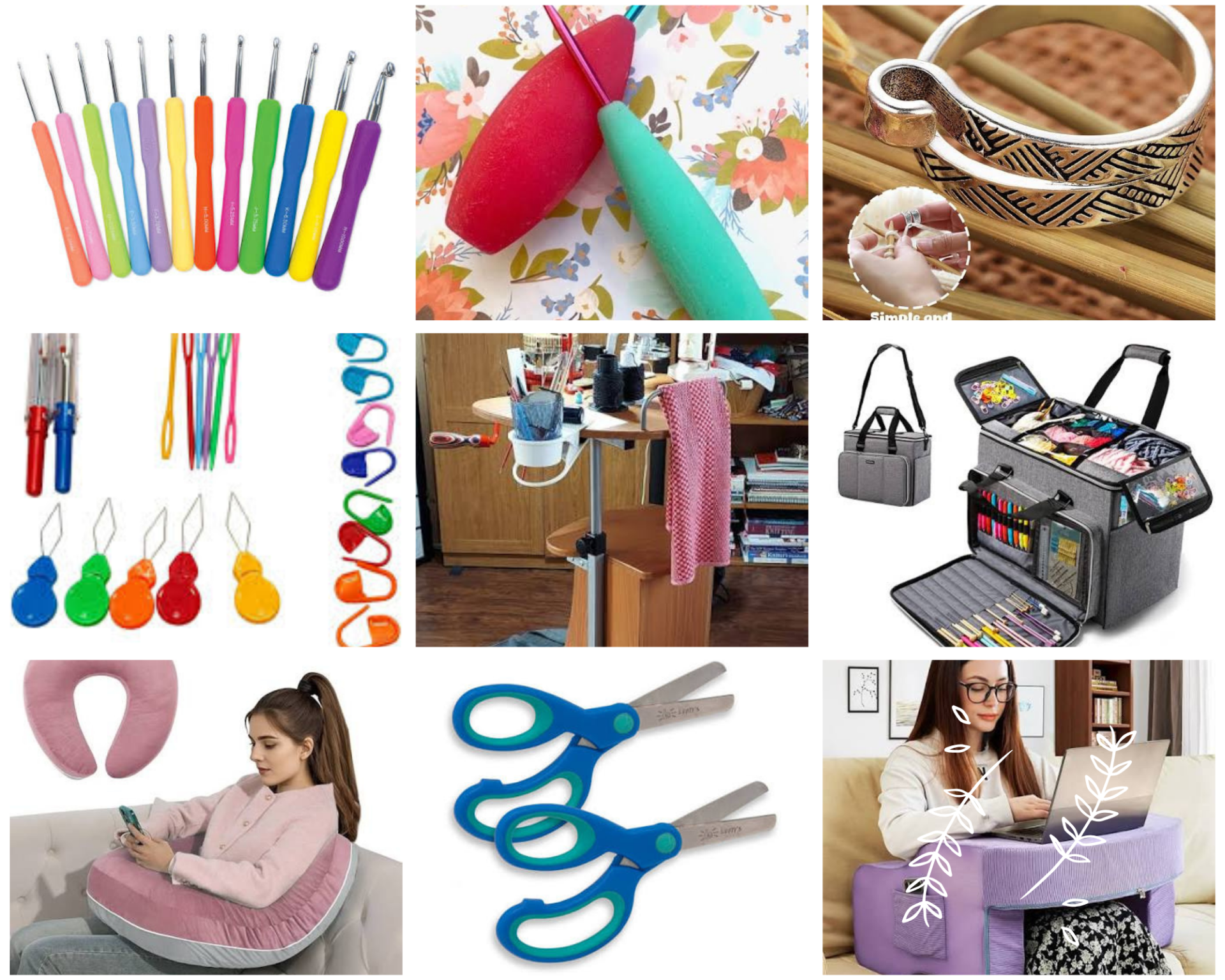
Supporting your body, enhancing your craft
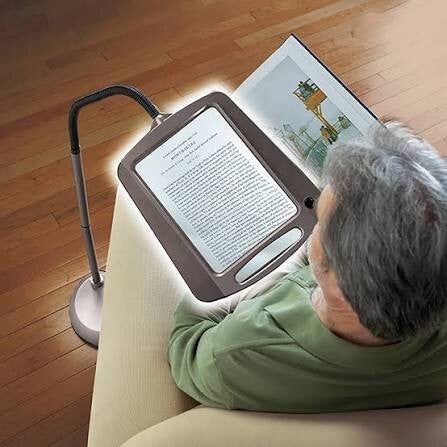
Just as a carpenter uses the right tools to protect their hands and a runner wears supportive shoes to protect their joints, fiber artists can benefit from tools designed to reduce strain and improve comfort. Adaptive tools are not "cheating," and they are not only for people with disabilities. Ergonomic hooks, tension rings, supportive cushions, magnifying lamps, stitch markers, and other accessibility aids can help reduce fatigue, improve posture, and make crafting more enjoyable. For individuals living with arthritis, limited mobility, vision challenges, repetitive strain injuries, or chronic pain, these tools can make the difference between giving up a beloved hobby and continuing to create with confidence. The goal is not to force your body to adapt to crochet. The goal is to adapt crochet to support your body, allowing you to enjoy the physical, emotional, and social benefits of fiber arts for years to come.
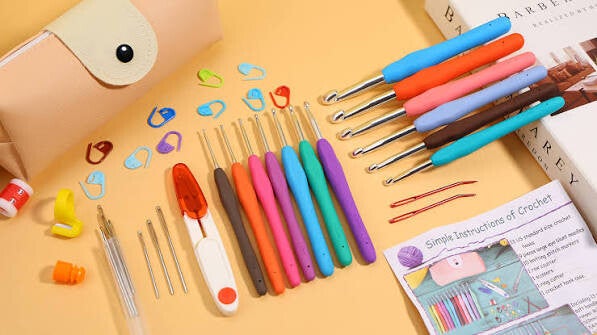
Essential tools for comfortable crafting
You do not need a room full of expensive supplies to get started with crochet. A comfortable hook, a pair of scissors, a yarn needle, stitch markers, and good lighting will cover most beginners' needs. As your skills grow, you may choose to add tools such as row counters, tension rings, ergonomic grips, project bags, or blocking supplies. The best tools are not necessarily the most expensive ones. They are the tools that help you work comfortably, confidently, and enjoy the creative process. Many crocheters never need any adaptive tools, while others find that one or two simple modifications make a significant difference. Start with the basics and add tools only if they improve your comfort, confidence, or enjoyment.

Tips, videos, and tutorials for a pain-free journey
One of the greatest advantages of learning crochet today is the abundance of free tutorials available online. Whether you prefer written patterns, step-by-step photos, or video instruction, there are resources available for nearly every skill level and learning style. Video tutorials can be especially helpful for visual learners, allowing you to pause, rewind, and practice techniques at your own pace. Learn how to hold your hook, position your body, and take breaks effectively to minimize strain. Our resources are curated to help you prevent common issues such as "gaming neck" and general back pain, ensuring your focus remains on the joy of creation. Remember that every instructor teaches a little differently, so if one tutorial doesn't click, don't be afraid to try another until you find a teaching style that works for you.
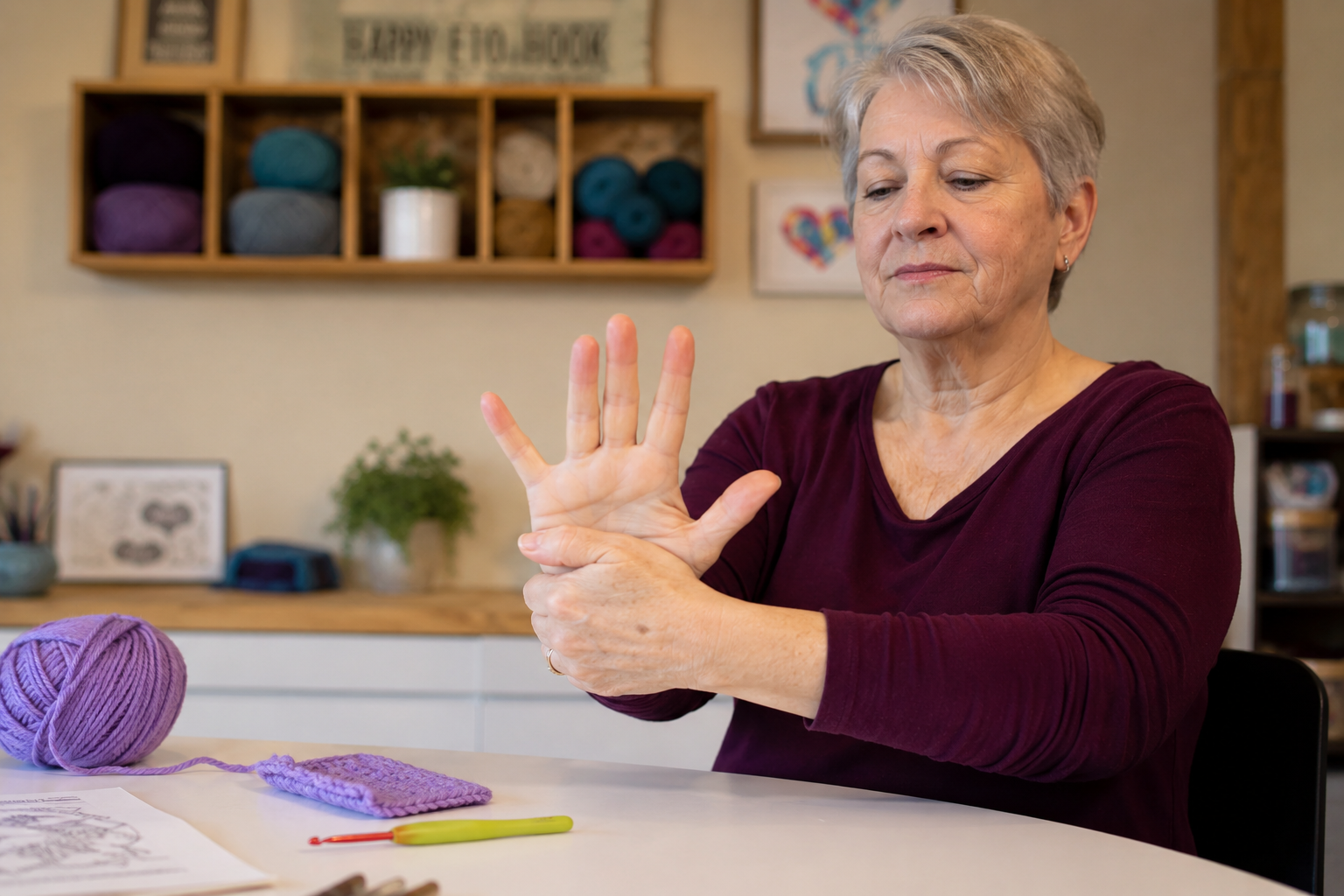
Stretching & Self Care
Taking regular breaks, stretching your hands and wrists, and maintaining good posture can help reduce fatigue and discomfort during longer crafting sessions.
https://youtu.be/ynVH3K-tyhA?si=4PUJiYhr_Z7Zc7qb
https://youtube.com/shorts/ZbPLJvf5nt8?si=J7SExt3XshGVf29Z
https://youtube.com/shorts/ai0-HTgQkdo?si=jp2crHOVn2Hoy6ue
https://youtube.com/shorts/a9pY2MOtRbI?si=Ddv7D5n6WufJ-V9t
https://share.google/kOCyPwdEfe2SnD5Fp
Crazy Yarn Lady Philosophy
At Crazy Yarn Lady and Crazy Yarn Club, we believe crochet should be accessible, welcoming, and adaptable. There is no single "right" way to hold a hook, learn a stitch, or create something beautiful. If a tool, technique, or adaptation helps you craft comfortably and confidently, use it. The goal is not perfection. The goal is participation.
The resources on this page are provided for educational purposes only and are not intended as medical advice. If you are experiencing ongoing pain, numbness, weakness, or other physical concerns, consult a qualified healthcare professional.